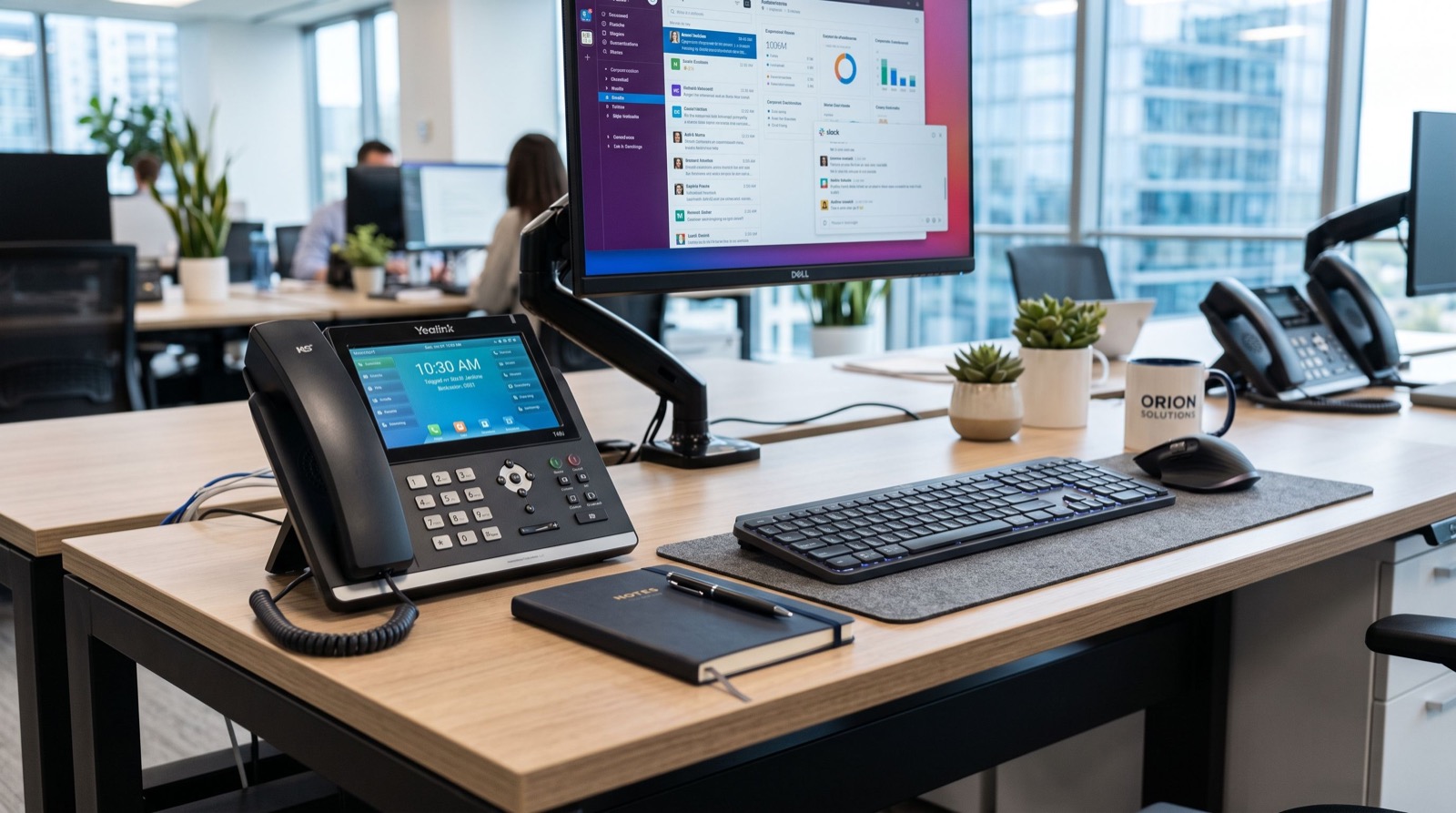
Choosing the right enterprise IP phone in 2026 can decide whether your teams collaborate smoothly or fight with dropped calls and clunky menus all day. An enterprise IP phone is a SIP-based desk device that carries voice (and often video) over your data network instead of legacy copper lines, and the model you pick shapes call quality, user comfort, and total cost for years. This guide walks through what actually matters when you buy business phones at scale, how flagship models differ from everyday handsets, and how to match hardware to real workflows.
We have deployed hundreds of SIP endpoints across call centers, hotels, and corporate offices, so the recommendations below come from the field, not a spec sheet alone.
What makes an enterprise IP phone different in 2026?
Consumer-grade phones and true enterprise IP phones look similar on a desk, but the engineering underneath differs sharply. Enterprise units support multiple SIP accounts, hardware-accelerated audio, gigabit pass-through, and remote provisioning so IT can push settings to a thousand handsets at once.
They also survive daily abuse. A flagship desk phone runs 24/7 for years, and the components — the handset cord, the color display, the PoE circuit — are rated for that duty cycle. When you evaluate a high-end model such as the Fanvil X210, you are paying for that longevity plus a larger screen, more programmable keys, and richer codec support.
Core features to demand
- Codec breadth: Opus and G.722 wideband for HD voice, plus G.711 fallback.
- PoE (802.3af/at): one cable for power and data, no wall adapters cluttering desks.
- Gigabit dual ports: the phone and the PC share a single drop without throttling.
- Mass provisioning: auto-configuration via TFTP/HTTPS so rollout is minutes, not days.
- Expansion modules: add BLF/DSS keys for receptionists and operators.
Flagship vs. everyday: matching the phone to the role
Not every seat needs a top-tier device. A receptionist, a trading desk, or an executive benefits from a big display and dozens of line keys. A warehouse phone or a break-room extension does not. Buying one model for everyone wastes budget or shortchanges power users.
A practical fleet mixes tiers. Put flagship handsets where call volume and visibility are highest, and place lean business phones like the Fanvil V61G Prime Business Phone at standard desks that mainly need clear audio, a couple of lines, and reliable transfers.
Comparison at a glance
| Attribute | Flagship enterprise phone | Prime business phone |
|---|---|---|
| Typical user | Reception, exec, operator | Standard office desk |
| Display | Large color, often touch-ready | Color, mid-size |
| SIP accounts | Many (16+) | Several (up to ~6) |
| Programmable keys | High, expandable | Moderate |
| Best for | Heavy call handling | Everyday calling |
Deployment: the part buyers underestimate
Great hardware fails without a clean rollout. The network, the PBX, and the provisioning method matter as much as the phone itself. Plan these before a single unit ships.
- Audit your LAN: confirm PoE budget on switches and enable a dedicated voice VLAN.
- Set QoS: tag SIP and RTP traffic so voice never competes with backups or downloads.
- Standardize firmware: lock every unit to one tested build before go-live.
- Template the config: one provisioning file drives the whole fleet.
- Pilot first: deploy 10 phones, gather feedback, then scale.
For a complex multi-site rollout, lean on an experienced local team that can stage, provision, and support the hardware regionally instead of shipping blind.
Total cost of ownership: look past the sticker price
The purchase price of a desk phone is only the beginning. Over a five-to-eight-year life, the true cost includes power, cabling, provisioning labor, firmware maintenance, and eventual replacement. A cheap handset that fails in eighteen months costs more than a durable one that runs for years.
PoE is a quiet money-saver here. By powering phones from the switch, you eliminate dozens of wall adapters, simplify UPS backup, and cut installation time. Multiply those savings across a hundred desks and the difference is real.
Provisioning is the other hidden lever. Mass auto-provisioning means one technician configures a thousand phones from a template in an afternoon, instead of touching each device by hand. When you evaluate models, weigh how easily they slot into a zero-touch deployment, because that labor saving dwarfs small hardware price gaps over the fleet’s lifetime.
Practical field tip
Before you place a bulk order, buy two sample units and run them through your exact PBX, VLAN, and QoS setup for a week. We catch more compatibility surprises in a seven-day pilot than in any spec-sheet comparison, and it costs almost nothing to do. Test call transfers, headset behavior, firmware updates, and provisioning end to end so the full rollout holds no surprises.
Security and standards you should not skip
VoIP rides on open protocols, so encryption is non-negotiable in 2026. Insist on SIP over TLS and SRTP for media, and disable default web passwords during provisioning. The underlying SIP behavior is defined in the IETF standard RFC 3261, and understanding it helps your admins troubleshoot registration and NAT issues quickly.
Vendor documentation is your other anchor. Cross-check any spec claim against the official Fanvil product resources before you commit to a bulk order, since firmware features evolve release to release.
Frequently Asked Questions
How many SIP accounts does an enterprise IP phone need?
For most staff, two to four SIP accounts cover a personal line, a shared queue, and a departmental group. Receptionists and operators benefit from flagship handsets that support many more, letting them monitor and route calls across the whole organization from one screen.
Is PoE required for business IP phones?
It is strongly recommended. Power over Ethernet delivers power and data over a single cable, removing adapters and simplifying failover to a UPS-backed switch. If your switches lack PoE, budget for PoE injectors rather than cluttering desks with power bricks.
Can I mix flagship and standard phones on one PBX?
Yes. Because SIP is an open standard, a single PBX happily registers a mix of flagship and everyday handsets. This is the smart way to control cost: give power users premium devices and keep standard desks on lean, reliable models.
How long do enterprise desk phones last?
Well-built enterprise IP phones commonly serve five to eight years. Firmware updates extend their useful life by adding codecs and security fixes, so buying from an active vendor with ongoing support protects your investment.
Conclusion
The right enterprise IP phone fleet in 2026 blends flagship power where it counts with dependable everyday handsets everywhere else, all deployed on a secure, well-tuned network. Match hardware to roles, standardize provisioning, and enforce TLS/SRTP from day one. Ready to modernize your desks? Talk to a specialist about the best model mix for your business and get a quote that fits both your workflow and your budget.